What's a War Room and What Should Be in Yours?
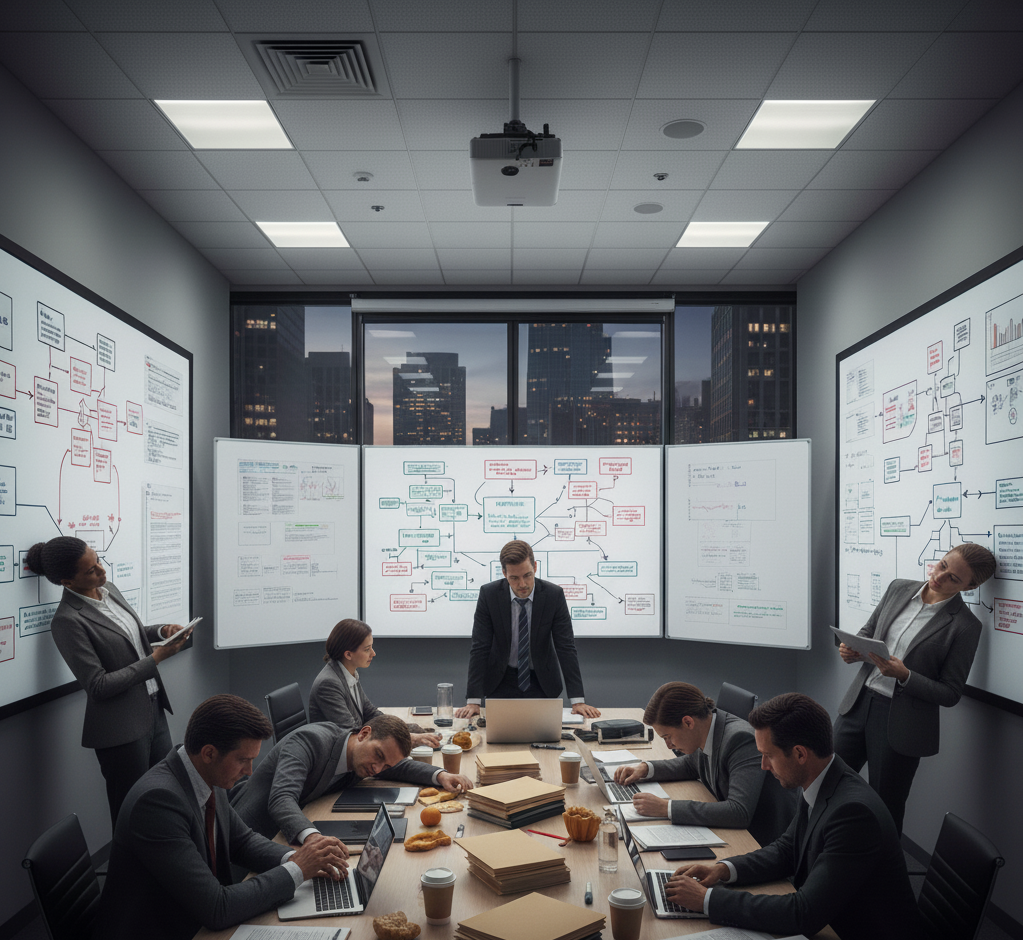
We're preparing for trial, which is always an opportunity to review and update our pretrial checklists concerning the supplies, logistics, and other background work that are necessary to keep the train on track. In an ideal world, the best time to do this would be immediately after trial, when memories are fresh and areas for improvement most obvious. But often a combination of fatigue and the need to turn back to other cases makes this impossible.
We handle trials of a variety of sizes and lengths, ranging from brief one week excursions to extended vacations from reality lasting just short of forever. But unless your trial is extremely short—and frankly even if it is—you're going to want a war room, a dedicated working space where the attorneys and paralegals on the trial team can process the mountain of behind the scenes work that goes on outside of the courtroom.
1. Why Have a War Room?
If you haven't tried a large case, you might wonder why a dedicated room is necessary. Your people have offices, don’t they? But trials involve many people working on the same document intensive project for long and/or odd hours. They also involve long meetings with witnesses, who do not have their own workspace. The volume of paper, even in this digital page, cannot be overstated. Even for well-organized attorneys there is a lot of hunting through boxes of binders in search of proof of a particular date or half remembered fact. You need a space where multiple people can manage a pile of paper and that isn't your personal office.
2. Where Should Your War Room Be?
The location of your war room is absolutely critical. It was top of mind when we selected our offices, and we intentionally chose a location in the financial district that was less than five minutes from most Manhattan courts (which largely cluster near Foley Square, with a few exceptions in Midtown or on the Battery). We're also within fifteen minutes of the Brooklyn courts, at least those clustered between Cadman Plaza and Borough Hall. This means that for local trials, we can largely construct a war room in our existing conference room space.
If you're trying a case in another city or more than a few minutes from the courthouse, you're going to need to look for temporary space nearby. Nearby needs to be nearby, for a variety of reasons. First and foremost, with the crazy hours people work during trial and the need to sleep, driving an extra 15 or 20 minutes from the court to the war room or the war room to your hotel is not just annoying, it's tactically unwise. But secondly, it is extraordinarily common to e-mail or text requests from the courthouse to the war room, asking the folks there to run some new exhibit, demonstrative, or briefing over to the courthouse during trial. As with pizza, there's a big difference between getting a delivery like that in 30 minutes and it taking an hour or more.
The best location, if you can swing it, is inside the courthouse itself. This isn't always possible, and you may need a secondary location for late night or weekend work period. But nothing beats having the ability to spread out in an unused jury room or other available space just down the hall from where the while it's happening. When that won't work, look for hotel conference room space, co-working locations, or local law firms near the courthouse. You really don't want to be running things out of an ordinary hotel room, not if you can possibly help it.
3. What Should You Have in Your War Room?
While running to Walmart in the middle of the night in some strange city is its own kind of fun, you would just as soon make sure that your war room has everything that you need from the get go. So what is that?
First, more printed sets of exhibits than you think you're going to need. It's hard to share. If you're going to prep a witness, you both need a copy. If someone is writing a last minute motion in limine, they are going to want their own set too. Plus exhibit sets are often rapidly cannibalized by a trial team in service of getting things done quickly. The exact number is going to vary a bit, and depend on whether you can leave a set or two in a courtroom as well, but it's not crazy to have more full sets than people on the team.
Second, you need the ability to access your electronic case files and print additional documents from them. That means computers, power sources, reliable internet, and some kind of printer. How sophisticated your printing operation needs to be is case specific, but at the very least you need a cheap inkjet printer on site and for larger cases some kind of dedicated multifunction laser printer.
While you will need reliable internet you should not rely exclusively on the internet for document access and should have some local device with your entire case file: pleadings, motions, depositions, and all discovery (if practicable; everything ever used pretrial if not).
Third, you're going to need office supplies. Office supplies are like clothing—everyone uses it but many people have very specific preferences that do not necessarily align. You shouldn't tear your hair out making sure everyone has their favorite pen, but it is worth making sure that people whose workflow is heavily reliant upon post it notes, highlighters, colored flags, or steno sized legal pads has them available during trial period if you're using an ELMO, you're going to want colored markers, cardstock, and sharpies in addition to normal pens. If you're using a chalkboard or a white board, you're going to want dry erase markers, chalk, erasers, and everything else that people will invariably lose.
Fourth, it isn't clear that a space counts as a war room unless it has snacks. People are going to be working long crazy hours in this space and often won't have time for proper meals. Now medical science will tell you to stock the war room with healthy snacks like fruit and carrot sticks and god-only-knows what else. And that's wonderful to have available if people will actually eat it. But there is also a great demand for extraordinarily unhealthy snacks of the sweet or carby variety during trial and if that's what folks want, it's best if it's available. I don't necessarily endorse doing what I did during my first trial and eating a cookie every hour all night to stay focused and stave off exhaustion. But I'm also not saying it won't work, at least in the short run.
Fifth, you need some way of keeping track of everything that needs to happen and who is handling it. Usually this is a white board or something similar. One pricey, but very cool option that some printers can do is a printed white board with a calendar overlaid on it. So you can literally write down on each day what has to get done and who is handling it. This makes it very easy at a glance to determine whether you are on track. And in a very satisfying fashion, you can cross things off or erase them as they are accomplished.
No matter how much you prepare, trials are labor intensive and potentially stressful. But setting up good back office support in a war room can free you to labor and worry about the parts of the presentation that actually matter.