Did Al Capone Get a Fair Trial?
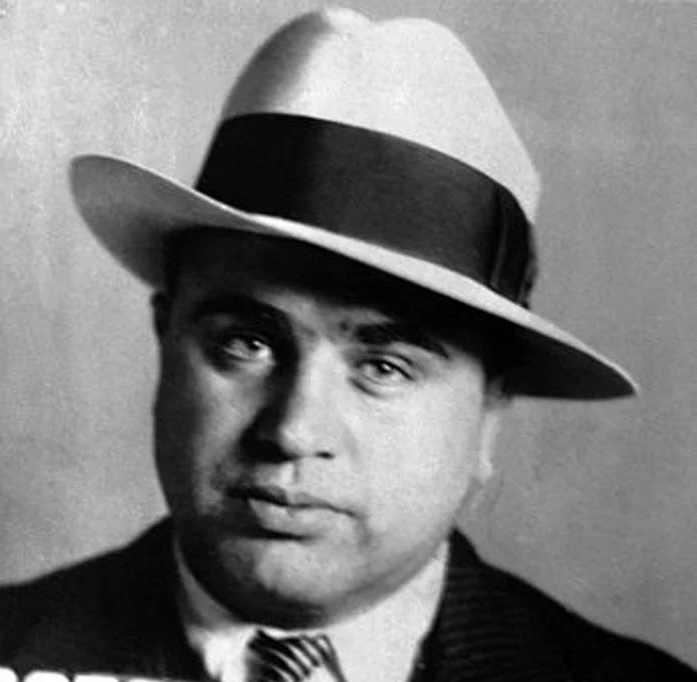
It's a recurring joke at this point that the United States has had a “trial of the century” every couple of years. The title is hard to fairly award, since most folks don't live a century and vanishingly few have a clear recollection for highly publicized trials spanning more than a few decades. And that's without addressing what the proper criteria is for a trial of the century, whether it's public profile, outrageous facts, or lasting impact on society—or at least the law.
One clear candidate that has all but passed beyond living memory is the 1931 trial of notorious gangster Al Capone. The trial, ostensibly for income tax evasion and failure to file tax returns, dominated the contemporaneous news coverage, and is generally known to folks born more than fifty years later. Even today, should you ask a random person what happened to Al Capone, they're likely to fire back—“they got him on tax evasion.” Not bad—it’s hard to imagine folks in 2070 will have much specific recall about the O.J. Simpson trial.
But what happened in this trial? And even ignoring the wantonly selective prosecution, did Al Capone get a fair opportunity to defend himself against the charges?
Alphonse Capone was born on January 17th, 1899, in Brooklyn, his parents having immigrated from Italy. He left school at age 14 and took odd jobs, ultimately becoming involved in several small time street gangs. While working as a bouncer, Capone was slashed on the left side of his cheek after a dispute, leading to his well-known nickname, Scarface. [1]
In 1919 Capone moved to Chicago, the same year that Congress passed the Volstead Act, the draconian alcohol prohibition statute that had been authorized by the 18th amendment. As a result of this ban on lawful alcohol sales, a vast and lucrative underground market emerged for criminal alcohol distribution. Chicago's status as a large population center located on a major waterway connected to Canada—where liquor was cheap and legal—made it a natural hotbed for bootlegging. [2]
Capone initially served as a bodyguard and close associate of Johnny Torrio, the boss of a criminal syndicate known as the Chicago Outfit. In 1925 Torrio was wounded and nearly killed in an assassination attempt by a rival gang. Torrio retired from the business, leaving the United states entirely to reside in Italy. He handed control of his operation to Capone, then only 26 years old. [3]
What followed was a bloody gang war played out on the city streets of Chicago, aided by the availability of machine guns for use in assassination attempts. Capone survived, sometimes narrowly, all efforts to kill him, investing heavily in security and purchasing more defensible the states outside Chicago, such as a palatial compound in Palm Beach. His rivals, in contrast, kept turning up dead. Where others might have sought to lower their profile, Capone instead embraced publicity, offering up quotes to newspapers, signing autographs in public, and allowing himself to be photographed wearing his ostentatious suits, albeit from the side that concealed his prominent facial scars. [4]
The federal authorities ultimately reached their breaking point with Capone following the 1929 Saint Valentine's Day massacre, a brutal hit on one of Capone’s rivals for which he was widely blamed. Four men dressed as police officers conducted a phony raid of a trucking warehouse controlled by Bugs Moran, head of the North Side Gang. When the warehouse workers surrendered to the “police” they were ordered to stand against a wall, expecting to be handcuffed and taken to jail. Instead, gunmen with shotguns and machine guns slaughtered the workers, leaving a room full of bloody corpses to be found. Photos of the carnage shocked the public and led to the direct intervention of President Herbert Hoover, who ordered multiple federal agencies to concentrate their efforts on putting Capone in prison. [5]
Unable to tie Capone to bootlegging, prostitution, or murder, for which he was broadly assumed responsible, various state and federal prosecutors began charging Capone with anything they could find. After he claimed illness to postpone a grand jury appearance, Capone was charged with contempt of court and sentenced to six months imprisonment. He was arrested and sentenced to a year in prison for carrying a concealed weapon in Philadelphia. He was also arrested (dubiously) for vagrancy in Miami Beach. [6]
But the Treasury Department had a more effective plan. In 1927, in United States v. Sullivan, the Supreme Court ruled that the Fifth Amendment does not excuse criminals from being required to file tax returns disclosing illegal income. Treasury Agent Frank Wilson was charged with finding evidence of Capone’s income, as he had not filed federal tax returns for 1924-1929. [7]
Realizing the danger, Capone enlisted an attorney, Lawrence Mattingly, to settle his back taxes with the government. In 1930 Mattingly made a written offer to settle the disputed years, albeit for a small fraction of what Capone likely earned. But Treasury had been tasked with putting Capone in prison and was uninterested in a civil settlement. In March of 1931, Capone was indicted for tax evasion and failure to file tax returns. [8]
The case was not an easy one. Capone had no bank accounts, signed no checks, and no property records establishing his ownership of businesses existed. The only ostensible documentation of payments to him was a set of ledgers seized from a gambling hall that cryptically referred to amounts due to “Al.” While Capone had not filed income tax returns for the relevant years, few Americans had, as the federal income tax was barely 10 years old and few people were lawfully subject to it. But the government had one cooperator, Fred Reis, who had signed large checks in connection with an Illinois gambling hall. After obtaining his grand jury testimony, the government flew Reis to South America to hide him from any potential foul play before trial. [9]
Given the difficulties in proving the case, the U.S. Attorney was willing to plea bargain, so long as Capone served at least some prison time. Prior to the trial, he and Capone’s attorneys agreed on a 2 ½ year sentence. Expecting that the deal would be honored, Capone pled guilty on June 18th, 1931. But the court had other plans. Federal Judge James Wilkerson rejected the plea, stating that “it is utterly impossible to bargain with a federal court” and ordering both sides to try the case in October of 1931. [10]
Before the trial began, an informant told the government that Capone's organization had obtained a list of the jury pool and was determined to fix the result by any means necessary. The list provided by the informant ultimately matched the actual pool. The government informed Judge Wilkerson, who told prosecutors not to worry about it. On the first day of trial, with jury selection about to begin, the judge told the entire jury pool to go to the courtroom next door and switch places with a different jury pool called for a less contentious case. [11]
The government's case was largely circumstantial. They presented evidence of substantial profits earned at the Hawthorne Smoke Shop, a gambling hall in Cicero, Illinois, though none of the witnesses would directly admit that Capone was the owner. The government also introduced—over vociferous objections from the defense—the settlement offer that Capone’s tax attorney made while trying to resolve the back taxes. Shopkeepers and other luxury vendors were called to describe Capone’s profligate spending. The government ended with its cooperator, Reis who admitted to signing large checks in connection with the profitable gambling hall. [12]
Capone's defense attorneys were criminal lawyers, not tax experts, and by all accounts unsuited for defending a technical case. They called a collection of bookies to testify that Capone was a problem gambler, who had lost more on horse racing than he ever could have made in illegal gambling income. It is not clear how seriously they expected the jury to take this, and in closing argument defense counsel hit on what was, perhaps, their real defense, that the entire case was pretextual and that Capone had been targeted by a government determined to send him to jail for any charge they could bring. [13]
While probably true, this did not stop the jury from convicting Capone on five counts of tax evasion. He was sentenced by Judge Wilkerson to eleven years in prison, to be served consecutively with the six month contempt of court charge. Capone was only 32 years old at the time. It was the longest sentence ever handed down for tax evasion—so again, the income tax was not terribly old at the time. [14]
Was the trial fair? By the standards of the time…maybe. And Capone’s lawyers certainly did him no favors with their ill-conceived “he's a degenerate gambler” defense. But it's worth noting that criminal tax evasion today requires proof of intent. It’s not enough to get your taxes wrong—the government needs to prove that you knew that you weren’t paying what was due. And it’s hard to believe that Capone genuinely knew that he owed federal taxes, at least for some of the years involved. Indeed, he was convicted of evading taxes in years prior to the Supreme Court holding that unlawful earnings were actually taxable. And prior versions of the tax code had explicitly stated that only lawful income was subject to the tax. While we can’t know what tax advice Capone was given, it's likely that he would not have been told to file under the law in place at the time. Also, the government's use of an offer of civil settlement by an attorney as evidence of his client’s guilt is an extremely dubious as an evidentiary matter. The Federal Rules of Evidence, of course, would not be drafted until 30 years after Capone's conviction.
It is the folly of presentism to judge the past by the standards of today. But it is worth noting that many of the evidentiary safeguards and rules that we take for granted emerged as a reaction to practices that seemed unfair even when used to punish very bad people like Al Capone.
[1] https://www.fbi.gov/history/famous-cases/al-capone
[2] Id.
[3] https://famous-trials.com/alcapone/1474-home
[4] Id.
[5] https://www.fbi.gov/history/famous-cases/al-capone
[6] Id.
[7] https://www.myalcaponemuseum.com/id146.htm
[8] Id.
[9] https://famous-trials.com/alcapone/1474-home
[10] https://www.myalcaponemuseum.com/id146.htm
[11] https://chicagology.com/notorious-chicago/caponejuror/
[12] https://famous-trials.com/alcapone/1474-home
[13] Id.
[14] https://themobmuseum.org/blog/capone-tax-evasion-trial-jury-finds-chicago-mobster-guilty-on-5-of-22-counts/