What is Baseball Arbitration?
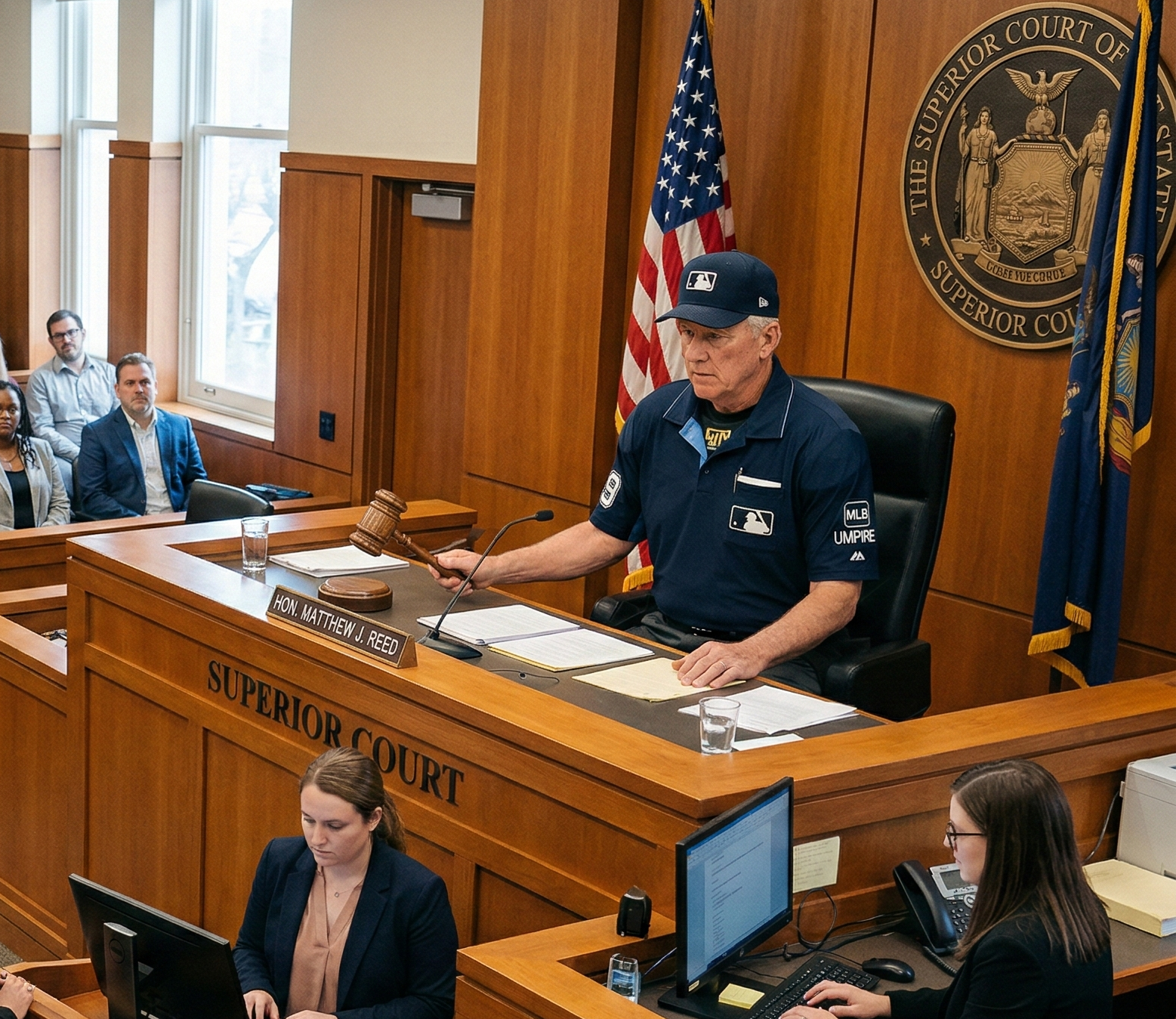
We've written before about unusual arbitration forums. And we often point out that we're still huge fans of the jury trial as the most robust and fair method of resolving disputes for most cases. While arbitration has its advantages with respect to confidentiality, subject matter expertise, and avoiding awkward discussions about whether a trading partner operates in a country with a functioning justice system, the lack of meaningful appellate review remains a big downside. While most jury verdicts aren't appealed, the idea of handing a single arbitrator the unchecked right to make your client pay any damages number that he or she writes down is a terrifying prospect. Even folks who swear by arbitration would generally prefer there to be some bounds on the range of outcomes that an arbitrator can order. And while “runaway arbitrator” awards are a concern, other practitioners complain about essentially the opposite problem, that arbitrators simply “split the baby” and pick a number in between those proposed by each side, effectively encouraging outlandish positions on both sides.
One of the most interesting variations in arbitration emerged from a mixture of such concerns. Final offer arbitration (“FOA”) better known as “Baseball Arbitration” is regularly used in a variety of contexts—including, of course baseball—as a way to privately resolve disputes without handing any arbitrator a blank check or getting some average of the parties’ positions.
So how does baseball arbitration work? There are many variations, but the fundamental conceit is that both sides propose an ultimate result, typically some amount to be paid to the plaintiff, and the arbitrator's decision has to be one of those two proposals. The arbitrator can't split the difference or come up with some other number. Before it became famous in baseball contract negotiations, FOA was used in collective bargaining disputes in the 1950s as a way of resolving union negotiations. Those negotiations between unions and employers often broke down and led to strikes, which were viewed as disruptive and costly to both sides. FOA was developed as a third-party resolution mechanism that could reduce the risk of strike.
In 1973, the MLB and player’s union settled on baseball arbitration as a way of addressing persistent balance of power problems in player salary negotiations with teams. Under the old “reserve system” owners could largely dictate where players competed and avoid bidding wars between teams over star talent. While the reserve system was upheld by the Supreme Court in the deeply nonsensical Flood v. Kuhn [1] decision, it was clear that some allowance had to be made for players to negotiate for fair payment from their teams, even if total free agency was not on the table.
As currently formulated, MLB players are totally under the thumb of their teams for the first two to three [2] seasons and can be forced to play for the league minimum salary. After three seasons, they can negotiate with their teams each year on salary. If the player and team do not come to an agreement, both make proposals to an arbitration panel which is empowered to pick one of those proposals based on specific criteria:
(a) The criteria will be the quality of the Player's contributions to his Club during the past season (including but not limited to his overall performance, special qualities of leadership and public appeal), the length and consistency of his career contributions, the record of the Player's past compensation, comparative baseball salaries [], the existence of any physical or mental defects on the part of the Player, and the recent performance record of the Club including but not limited to its League standing and attendance as an indication of public acceptance[.]
The panel issues no written decision and has 24 hours to decide.
Beyond avoiding “split the baby” outcomes and outlandish results, baseball arbitration proponents point to some major benefits period the biggest is encouraging settlement and reducing the scope of a dispute. Because arbitrators in a baseball arbitration must pick one of the two numbers, there is a huge incentive on both sides to moderate any proposal and offer as close to the actual fair result as possible. If you don't do that—if you come in with a proposal that is outrageously high or outrageously low—then the arbitrator is likely to give the other side whatever they asked for, even if it's only slightly less unfair than what you proposed. Since both sides have the same incentive, this tends to push the offers together.
While this incentive obviously reduces the range of arbitration outcomes, it also tends to cut down on the number of arbitrations, as parties that are very close together may choose to settle rather than incur the expense of a hearing.
While abstract reasoning about incentives is what gave rise to the structure of baseball arbitration, in practice it would also seem to have be borne out. Consider Vladimir Guerrero Jr’s 2024 arbitration against the Toronto Blue Jays. This resulted in a $19.9 million salary, the highest amount awarded to date. [3] But while you would normally expect a record verdict to be an aberrant result, the Blue Jays offer was 18.05 million, only about 10% less. And adjudication method that gets parties to within 10% of each other—and remember this was a case actually went to hearing—is likely to settle a lot of disputes.
The system isn't universally beloved in the MLB. Players who have been through the process often describe the hearings as extremely unpleasant, as they listen to their own team explain why they aren't any good at baseball and why players on other teams are better. And a majority of the clubs at least purport to take a hard line stance on negotiations to minimize the number of arbitrations. This is the so-called “file and trial” approach in which teams claim that they will not settle after the player invokes arbitration, even if the offers exchanged by the parties are close.
But baseball arbitration is popular and well known enough to have spread beyond baseball to other contexts as a way of resolving disputes. For example, a recent article noted the increasing prevalence of baseball arbitration and resolving construction disputes. [4] These disputes about the propriety of change orders or the quality of work often ultimately come down to damages. Similarly, in 2015 New York included mandatory baseball arbitration between insurers and medical providers in a surprise billing law aimed at protecting consumers from unexpected out of network hospital bills. [5]
And as it's been used in other contexts, variations on baseball arbitration have developed as well. Several interesting variations are often lumped together under the almost-too-perfect name “night baseball.”[6] These variations keep the parties proposals secret to one extent or another. For example, the proposed monetary results submitted by each party could be kept secret from the other, allowing the arbitration to proceed normally on the evidence but without either side knowing how far apart they really were. Another variation calls for the arbitrator to calculate damages—perhaps without knowing the bids submitted by either side—but the ultimate award is just whichever side’s proposal is ultimately closest to the number the arbitrator comes up with.
Or on the opposite extreme, the parties could take damages out of the arbitrators hands entirely. In that variation of night baseball, the arbitrator doesn't see the parties’ offers or compute damages at all. He or she just picks which side “prevails” and that side receives whatever their last settlement offer was. This last variation sounds slightly insane but could work where the parties aren't hugely far apart on damages or the liability issues are expected to predominate at the hearing.
And, on some level, night baseball is the logic of arbitration taken to its most extreme conclusion. Courts provide an open and thorough conflict resolution process designed to surface and consider all possible evidence and correct any possible legal errors. That thoroughness often comes at the expense of speed, confidentiality, and (arguably) cost. In many cases it is worth it.
But if what you're looking for is a neutral party to decide—quickly, finally, and outside of the public eye—whether you or the other side wins, night baseball arbitration is arguably the purest mechanism to meet that need. It encourages the parties to get to their best offers almost immediately and then decides between those offers. It can even do so without the arbitrator knowing the final result. It's certainly not for everyone or every dispute, but it’s a fascinating process and one that certainly has a place in the ADR landscape.
[1] 407 U.S. 258 (1972). Just read it if you think that I’m exaggerating. It’s not Dred Scott, but the case definitely qualifies as one of the weakest pieces of legal reasoning ever to drop out of the Supreme Court.
[2] Technically three, but with the exception that “a Player with at least two but less than three years of Major League service shall be eligible for salary arbitration if: (a) he has accumulated at least 86 days of service during the immediately preceding season; and (b) he ranks in the top 22% (rounded to the nearest whole number) in total service in the class of Players who have at least two but less than three years of Major League service, however accumulated, but with at least 86 days of service accumulated during the immediately preceding season. If two or more Players are tied at 22%, all such Players shall be eligible.”
[3] David A. Draper & Bobby Bramhall, Enduring 50 Years of Baseball Arbitration: Why It Matters and What We Can Learn, 63 No. 4 Judge’s J. 16, 17 (Fall 2024).
[4] Patrick R. Kingsley & Benjamin E. Gordon, Resolving Construction Disputes Through Baseball Arbitration, 74 Disp. Resol. J. 53 (2020).
[5] Sarah Jolley, Home Run or Strike Out: Can Baseball Arbitration Solve America’s Medical Debt Crisis?, 2022 J. Disp. Resol. 169, 175 (Spring 2022).
[6] Edna Sussman & Erin Gleason, Everyone Can Be a Winner in Baseball Arbitration: History and Practical Guidance, 91-Jul N.Y.St.B.J. 21, 22 (2019).