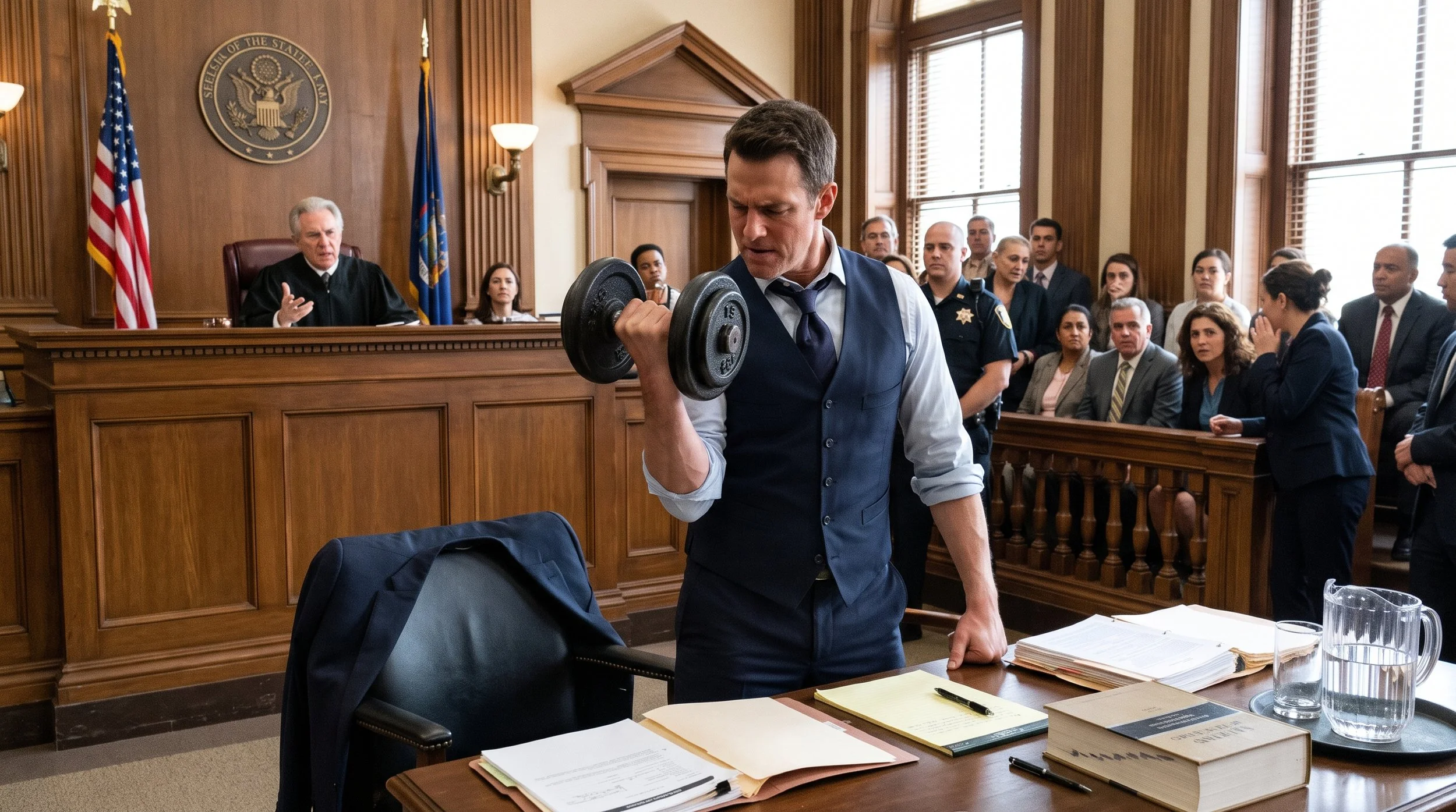
We've had quite a few trials this year and narrowly missed beginning another one today. In the immediate aftermath of all of that work it's tempting to focus on the case specific decisions, both for good (“I'm definitely using that expert again”) and for ill (“I'm never letting a guy like that on my jury again”). These lessons can be valuable. Some of our most useful habits emerge out of hard-won experience. But every trial is different, and it can also be useful to reflect on more general ways to improve trial presentation in any case.
So, before the trial calendar heats up again in the New Year, here are four perennial, case-agnostic ways to improve your trial presentation.
1. Record and Watch Yourself Do Everything
You aren’t typically permitted to record an actual trial so you can critique your performance. But anything you can practice you can video record and force yourself to watch. If you've never done this exercise, it will be both painful and extremely valuable. There is no faster way to sand off the rough edges in your speech and argument them to experience them as a listener. And if you are going to rehearse your opening and get feedback from others—and you should—why would you turn down feedback from your own eyes and ears?
But opening isn't the only part of trial you rehearse or the only part that benefits from video review. In most cases you will also practice direct examination with any friendly witnesses that are available. And here the benefits may be even greater. Any litigator is going to have at least some experience making arguments and speaking coherently, even if they're not William Garrow.
But even an intelligent witness often has no idea how they come across while answering questions in court. And many witnesses struggle to implement feedback in their answers. You can tell a witness to keep their answers short but if that's not how they function in their daily life they will struggle not to respond with a narrative. But if forced to watch themselves ramble in response to a simple question, even witnesses of limited skill can improve their demeanor and credibility.
The benefits are not merely for witnesses. If you've never watched yourself ask ten minutes of questions, you may also learn better why jurors tend to fall asleep while you're at the lectern.
2. Figure Out How The Other Side Wins
When interviewing potential applicants for legal jobs, it's common to ask them to explain a legal issue that they recently argued. I like to follow it up with the less common question: “OK, now how would you have won on the other side?” You would be surprised at how many attorneys absolutely recoil at the prospect of putting themselves in the other side's shoes. But in preparing for trial it is essential to consider how the other side wins.
The other side of the case isn't going to just roll over and not show up to trial (that has happened to us, but you certainly can't count on it). The other side is going to stand up and claim that they deserve to win. No matter how badly they deserve to lose they are going say something. So, figure out what they're going to say and how to beat it.
In doing so you've got at least three main sources of information. First, you've got the prior filings by counsel, particularly summary judgment motions. Good lawyers whose summary judgment motions are denied will evaluate how to modify the story that they tell at trial. But most lawyers either cannot or will not deviate from their original narrative, and you can largely predict what they're likely to say to a jury.
Second, consider what story their witnesses told in deposition. Even if the other side's lawyers would prefer to pivot, they may be constrained by the discovery record.
Third, figure out how you would win in their shoes. One universal truth about litigation is that it takes a long time. While smart, capable, lawyers will figure out a case faster than imbeciles, the sheer length of a case means that even the dumbest lawyers will often blunder their way to the right arguments eventually. So even if the other side has been upside down and backwards about the case thus far, assume that they'll get to the good arguments and the winning story by the time the jury is sworn. Get there first and figure out how to deal with them should they arrive.
3. Learn To Fight Without Your Best Weapons
In some courtrooms you will know well in advance of trial which evidence will be admitted, and which won't. But in many others, evidentiary rulings will be the biggest wild card you face at trial. While it’s exciting to rewrite your entire narrative on the fly because a judge decides that key bits are irrelevant and or prejudicial, there are better ways to have fun in a courtroom.
If you can't get advance rulings on evidence, then you must consider your contingencies. Take the key pieces of evidence—whether that's five or fifty—and give thought to how you could prove your case without them. This won't be easy or ideal; that's why they're key pieces of evidence. But going through the exercise is valuable for several reasons.
First, it will flag for you which exhibits or bits of testimony are merely good and which ones are truly irreplaceable. If a piece of evidence is genuinely irreplaceable then you need to figure out every possible avenue by which you can get it admitted at trial. That means every flavor of “state of mind,” “impeachment,” “not for the truth,” “rule of completeness,” “Judge, I think they opened the door to this,” and any other argument you can come up with whether it's a high percentage shot or a vanishingly low percentage shot. Obviously, you will lead with your best arguments for admissibility but be ready to go all the way down the list (so long as the arguments are ethical and colorable) rather than lose the case.
Second, it can identify where you need more redundancy in your case, ideally while you can still add to potential evidence. In some cases, you absolutely cannot prove liability or damages without a particular document or piece of testimony. But in many others you can give yourself a Plan B, even if it's a lot worse than Plan A. For example, in a lost profits case, your damages expert may be an absolute powerhouse. But if he gets excluded on Daubert grounds you'll feel a lot better if the client’s CFO was also identified as a potential damages witness. Even if the CFO can’t add and presents like a Hollywood villain, the redundancy at least gives you a shot to salvage the case.
4. Identify Free Rolls And Risks
In the earliest phases of litigation there is often no consequence to asserting every possible argument in your favor. This is expressed best in Racehorse Raynes’ famous line about defending a dog bite case. But you'll see examples all the time—complaints with thirty causes of action met by answers with forty-five affirmative defenses.
But a trial there are downsides to claiming that the dog that you don't own also doesn't bite. Some arguments are free rolls; the jury might believe them but you're no worse off if they don't. Others are calculated risks, if the jury doesn't believe what you are saying they will think less of you for having made the argument. Deciding which arguments to keep and which to take out is partially about which arguments persuade the most people, but it's also about which arguments have a catastrophic fail case.
For example, in a personal injury case, you may want every shred of damages you can get and be inclined to highlight the many ways that your client has suffered. But there's a risk there, because if the jury thinks that any of those damages are exaggerated, they may doubt your client's word about everything in the case. Or in a business case you may be inclined to tar the other side as dishonest people who intentionally swindled your client. But if the other side is sympathetic, you might be undermining your credibility with those attacks.
But in other situations, you can make even low percentage arguments without much risk. For example, if you're accusing the other side of fraud, you don't risk much by also asserting negligent misrepresentation. If you're calling the other side liars, saying that they recklessly told you things that were false is already priced-in. And even if you lose on some technical part of that claim, you haven't undercut your credibility in making it.
Life is risk and you're going to make at least some risky arguments at trial. But identifying which arguments carry risk and which ones are true free rolls allows you to better decide what is worth saying and what isn't.