Are British Trials More Civilized?
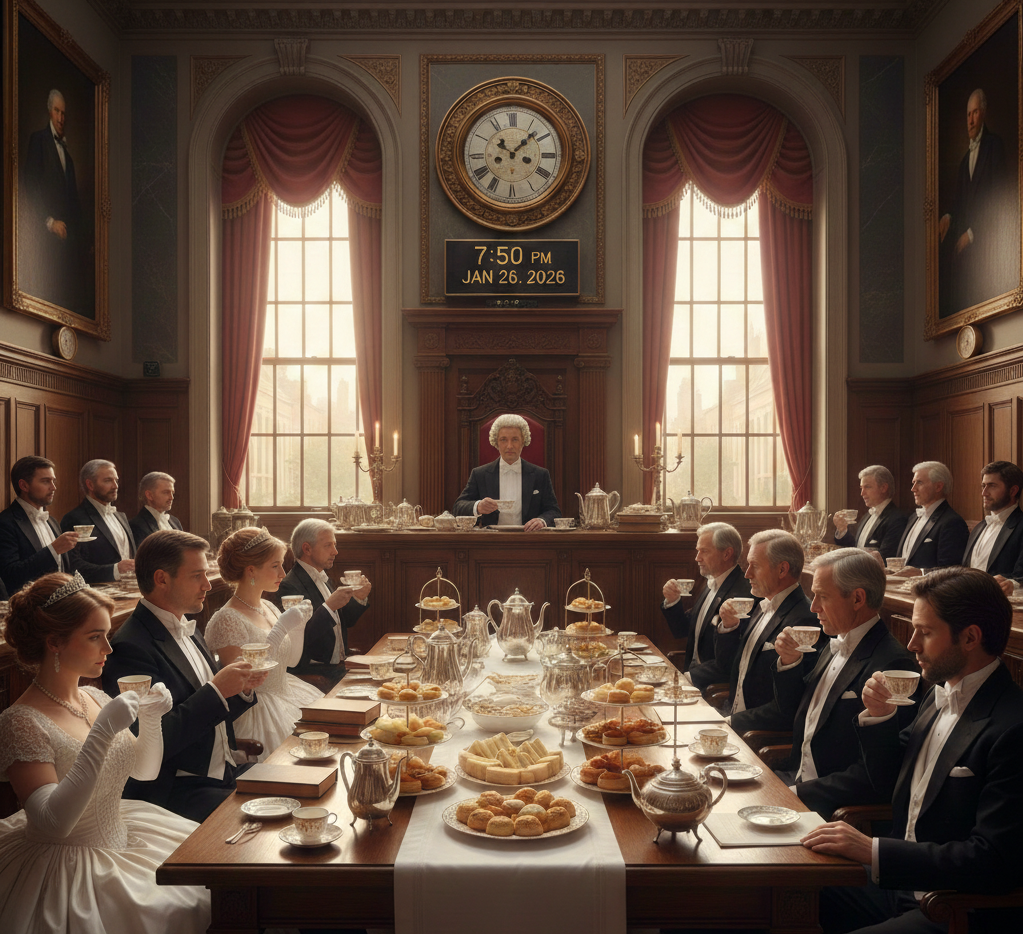
We wrote last week about Scottish criminal trials. Invariably when you speak to European lawyers, the differences between their procedures and ours are top of mind. Discovery is, of course, the major difference. In the United States a few hundred dollars and a plausible story are all you need to turn a corporation inside out, and every plaintiff has the right to look through whatever evidence of wrongdoing is in the defendant's possession, custody, or control. This belief in thorough pretrial disclosure is so ingrained in US litigation culture that even arbitration, practically built to reduce discovery costs, often has vastly broader and more comprehensive disclosure of evidence than you would get across the pond. Plaintiffs in Europe are often expected to have their proof ready before the case even begins, and if they don't, the courts do not think it unjust to toss their cases aside.
But if you move beyond discovery and the costs associated with it, you'll also hear foreign lawyers speak about the contentious, uncivilized, adversarial, nature of US trials. Some of this impression is doubtlessly due to the reach of Hollywood, and you can forgive folks whose main exposure to US trials comes from Suits or a A Few Good Men for thinking that American courtrooms are wild and crazy places. But even folks with direct experience with both foreign and domestic courts often comment on the sharply adversarial, even rude style of US trials.
A natural distinction that is drawn is between US trials and those held in Britain. It's an obvious comparator since the language is similar and both justice systems evolved from a common, and in the scheme of things fairly recent, ancestor. But our British trials more civilized? And would we have any interest in adopting the procedural variations that might make them so?
On the civil side, the British have done away with juries except for an ever-shrinking handful of niche offenses like malicious prosecution. Jury trials do exist for criminal cases, though the government has recently floated eliminating them for crimes punishable by less than five years imprisonment as a way of clearing a backlog of cases. But even where juries still hold sway, there are several key differences in the basic conduct of the courtroom.
First, all of the attorneys sit together at a single long table facing the front of the courtroom. The defendant does not sit with his or her counsel and instead occupies a dock, a cage of sorts made of plexiglass situated at the back of the courtroom. In principle, the docks are supposed to contain speakers so that the accused can hear what is going on. In practice defense attorneys often complain that the defendant can't even hear anything said at his or her own trial.
Second, attorneys rarely make oral objections to evidence. Instead, judges are expected to interrupt the proceedings themselves and strike or otherwise prohibit any questions or evidence that they believe improper. To the extent that there are objections that the judge does not take up sua sponte, the practice is for attorneys to confer amongst themselves quietly at their single table and reach agreement on the issue.
Third, judges actively inject themselves into the presentation of evidence in a more overt fashion than is common in the United states. Judges regularly question witnesses, sometimes at length. While American judges may ask a question or two if they believe that a witness has misspoken or that an answer risks confusing or misleading the jury, lengthy questioning is not common and, as we've written before, can be grounds for reversal.
And even more unusual, at least from a US perspective, British judges will summarize the evidence as they see it, prior to deliberations. Now we once had a US judge claim that he had the right to “comment on the evidence” when we questioned the neutrality of certain proposed jury instructions. But notably the judge did not seek to exercise this purported right (and somewhat begrudgingly made the edits that we requested). That was a civil case, but a US judge who summarized or commented on the evidence at a criminal trial would be courting appeal in a rather direct fashion.
Fourth, the defendant’s opening statement in a British trial does not come until after the prosecution has rested their case. This may sound minor but it's not and means that the jury doesn't even know the defendant’s theory of the case until the trial is basically over.
The collective effect of these procedural differences is a trial where the judge has an enormous amount of control over what the jury hears and the prosecution and defense are given almost no opportunity to argue directly against each other. Indeed, even the separation of the opening statements by days or weeks has the effect of preventing the attorneys from engaging with the other side’s position or contrasting their versions of events.
Anecdotally, this leads to a greater sense of civility in the trials themselves. But to test this, social science researchers have studied the effects of these procedures on how juries perceive the trial. In 1997 Solomon Fulero and Dennis Turner ran an experiment in which the same mock trial was done in front of test juries using British and American procedures. [1] They ran 3 versions, one wholly American, one British conducted by British lawyers who were visiting, and a third using the same American lawyers as the first trial but under British procedural rules. They then surveyed the juries on how they perceived the lawyers, the judge, the civility of the trial, and the basic fairness of the proceedings.
Interestingly, the procedural changes did not appear to influence the conviction rate, though one wonders what a larger sample size would show. But the main impacts were on the perceived civility of the trial and the perception of the judge. Participants rated the proceedings as materially more civil under British rules and found the judge (who was more involved) to be more likable. However, when questioned about which trial procedures they preferred, the jurors preferred all of the American features more, with the exception of the judge being more involved in witness questioning.
Another set of researchers followed up on this study six years later in 2003. Marissa Collett and Margaret Bull Kovera conducted mock civil trials under British and American procedures to see whether the procedural differences had an impact on the jury's ability to clearly evaluate evidence. [2] The results were mixed. While participants again characterized the British procedures as more civil and were better able to recall specific facts (likely because the judge had included them in his or her summary) there was no measurable increase in the ability of the jurors to differentiate between strongly and weakly proven claims. What's more, the jurors appeared more heavily swayed by small indications of bias or favoritism by the judge in favor of one party or the other when operating under the British rules. This is again likely a function of the judge’s increased role in the courtroom.
Both studies appeared to confirm what is commonly reported: that British trials seem more civil and more orderly to jurors who sit through them. But is that necessarily desirable? Several of the British procedures, in particular keeping the defendant in a soundproof cage where he or she cannot assist in the defense, putting off defense openings until the trial is basically over, and allowing the judge to comment on the evidence, would seem unimaginably prejudicial to the defendant by American standards. Indeed, several of these procedures would likely be held unconstitutional. It is also worth noting that other aspects of British law and practice may operate to keep some of this in check. As we've written before, it's considered highly unethical in Britain to prepare a witness to testify, meaning that some prosecution cases may fall to pieces in cross examination, potentially acting as a counterweight to other advantages that state prosecutors possess.
Moreover, any procedural changes that would empower judges at the expense of litigants and jurors, while likely leading to more decorum, may fundamentally undermine the basic logic of the jury system. A court judgment is an exercise of state power against a specific individual or entity—often a very damaging exercise of that power. The jury system exists both as a fact-finding tool (ensuring that many people agree on the facts justifying the use of state power) and as a moral check on the actions of the state (ensuring that multiple ordinary people have ratified what those in positions of power wish to do).
None of this is meant to cast aspersions on those across the pond, who have every right to make different choices about their laws and society than those made in America. But no matter how civil and dignified a British trial may be, there will always be those who prefer the adversarial, sometimes messy, and often rude approach to justice that is characteristically American.
[1] Solomon M. Fulero and Dennis Turner, Using British Trial Procedures in American Cases: A More Civil Trial?, Law and Human Behavior, Vol. 21, No. 4, 1997
[2] Marisa E. Collett, and Margaret Bull Kovera, The Effects of British and American Trial Procedures on the Quality of Juror Decision-Making, Law and Human Behavior, Vol. 27, No. 4, August 2003.